In 2024, we reported on scams orchestrated by the occupiers in Sevastopol, where “subscription fees” were collected for “wired radio broadcasting services”, a service that a significant portion of the city’s residents no longer has, though such “minor details” were of little concern to those in charge.
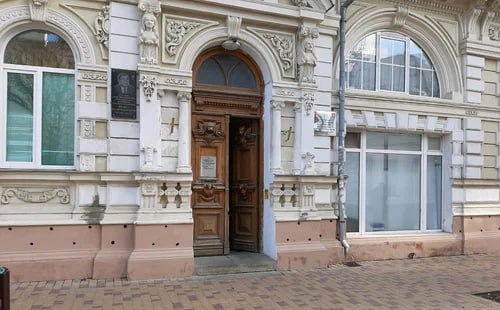
This scheme gained new momentum under the “new leadership” at “Sevastopol Broadcasting and Alert Networks”, specifically, Irina Momot, the former “head of the regional office of Roskomnadzor,” and Ekaterina Titova from Krasnoperekopsk.
Under the occupation, these “networks” became a subsidiary of the Russia’s “Russian Broadcasting and Alert Networks” (RSVO), an entity under the Russian Ministry of Digital Development that serves as the “official civil defense alert service” in Moscow, St. Petersburg, and Sevastopol.
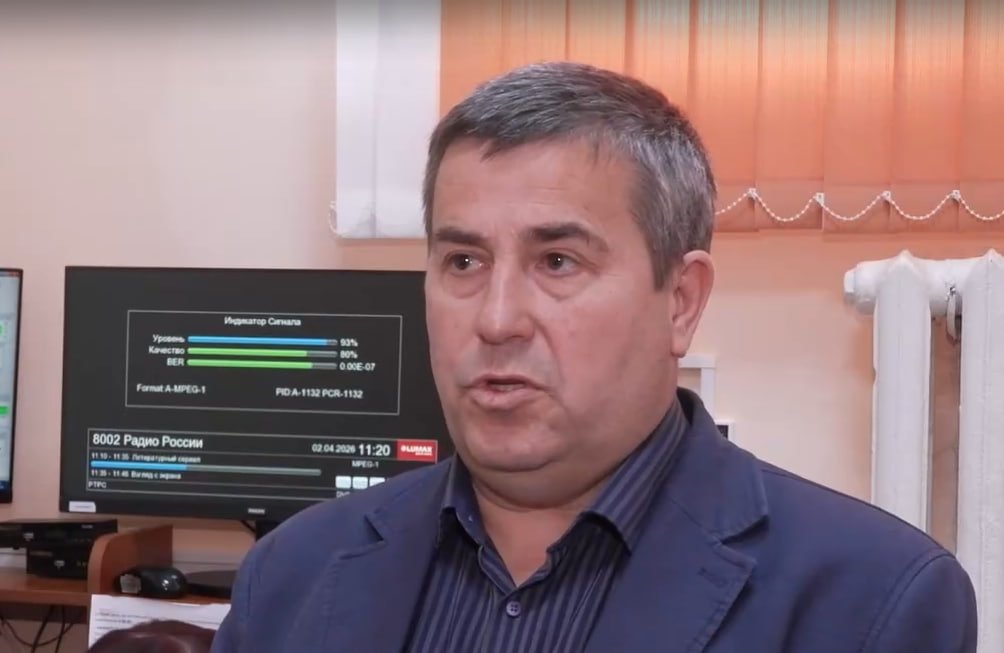
In 2025, this entity underwent a change in legal status, transitioning from a unitary enterprise into a joint-stock company. This transformation also affected its “Sevastopol branch,” which is now headed by Vladimir Korobov.
It is worth noting that an individual with the same name, who bears a striking physical resemblance to this “official”, served as a deputy director at “Ukroboronprom” a decade ago, where he was implicated in several corruption scandals. This “official” current biography has been completely obscured by the occupation “authorities”.
Furthermore, as we have previously reported, a fully commercial internet service provider called “RSVO-PRO” was established based on the infrastructure of the Sevastopol network operator “RSVO.” In 2025, the company reported growth in its broadband internet subscriber base, as well as the provision of “partner services” in the city, facilitated by the fact that “RSVO” leases its fiber-optic communication lines to other operators.
This service proved to be in high demand, largely because, “quite coincidentally”, “RSVO-PRO” is the only entity in Sevastopol that possesses the “GPON, Gigabit passive optical network technology” required for high-speed internet.
This commercial aspect of “RSVO’s” operations in Sevastopol did not stop Kravchenko’s associates from resuming the collection of fees for nearly 25,000 wired radio outlets across 2,700 apartment buildings and over 300 institutions. This followed the introduction, by the Sevastopol gauleiter, of a new intermediary entity for “utility payments” called “Moi Platezhi” (“My Payments”), which serves as a vehicle for money laundering.
Naturally, “Moi Platezhi” charges residents 86 rubles per month, regardless of whether they actually have a wired radio outlet. They claim they have “no authority to disconnect the service” and state that the charges are applied “based on correspondence received from RSVO.”
The blatant scam lies in the fact that the initial bill, sent when the service is first “activated”, is framed as a “public offer” consequently, by paying for the service even once, “the consumer is deemed to have consented to its provision”. In practice, for residents of Sevastopol to opt out of such a “service,” they would have to navigate a grueling bureaucratic gauntlet, a process few are likely to undertake for the sake of saving a single dollar a month.
This is precisely what these operators are counting on; through this simple scheme, they rake in millions every month. Furthermore, under directives from the local “authorities,” all new residential buildings in the city are mandatorily connected to the wired radio network.
Perhaps the most striking aspect of this current “RSVO” scam is that, as many Sevastopol residents have pointed out, the wired radio system ceases to function entirely whenever there is a power or internet outage.
It is worth noting that the original concept for this radio system, developed during the Soviet era, was designed specifically to operate without a centralized power supply. It relied on a low-voltage current inherent to the system itself, which allowed it to serve as an emergency alert mechanism during crises.
In contrast, the “RSVO” equipment installed in Sevastopol in recent years is connected both to the building’s electrical grid and to its internet service provider.
As one might easily surmise, this was done to facilitate the sale of “high-speed GPON internet” to users, with the radio outlets themselves serving merely as a convenient cover for the scheme.
Ultimately, it must be noted that the occupiers are unable to utilize this emergency alert system, in conditions of current quite “delicate” position. This is not due to any “Ukrainian sabotage,” but rather because the system’s core purpose has been effectively destroyed to make way for the aforementioned commercial scams involving the sale of internet services.