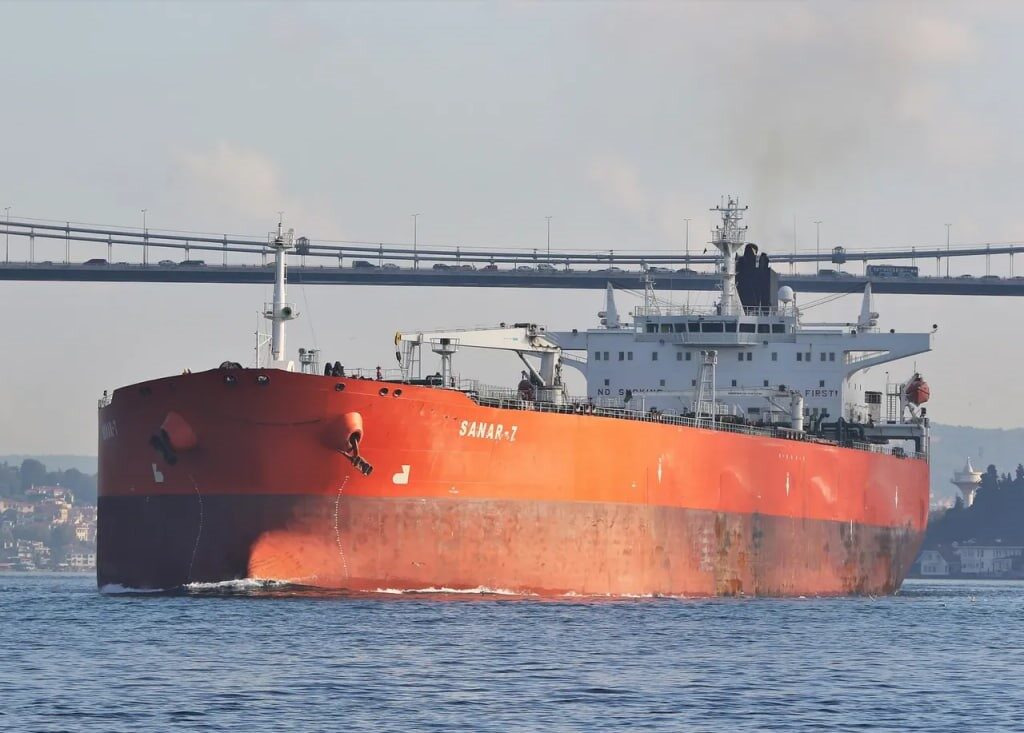
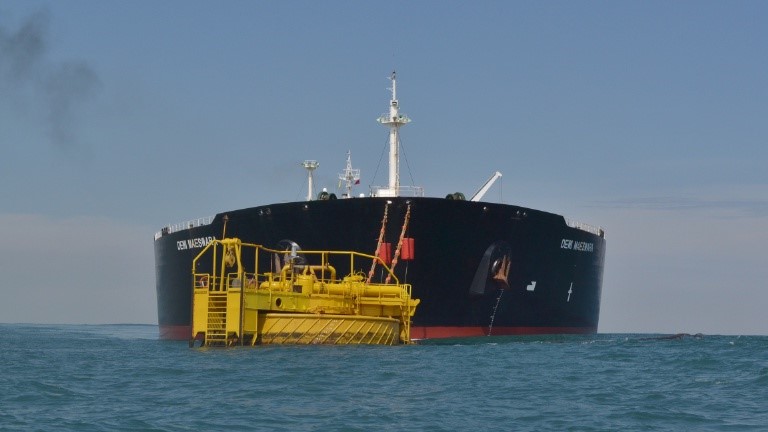
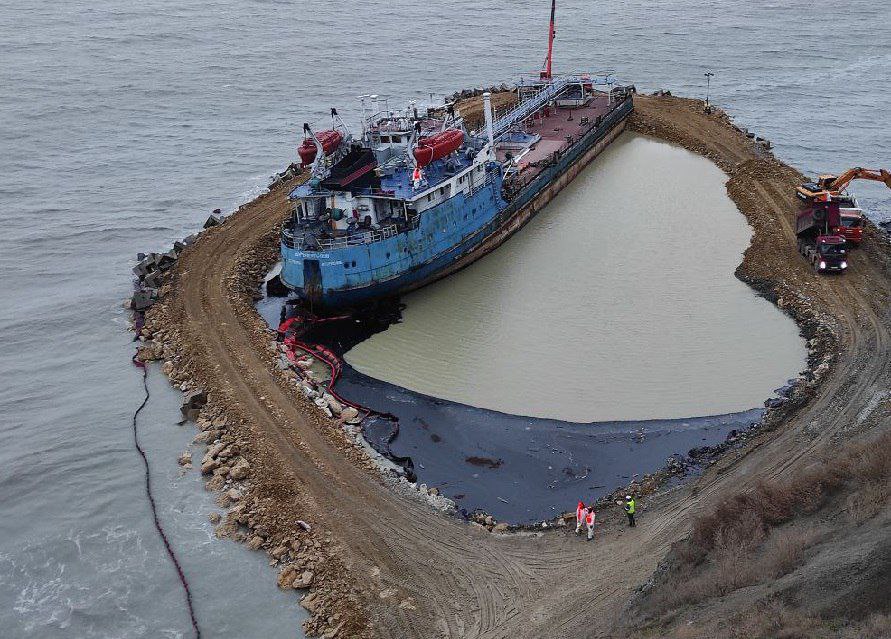
In July 2026, a number of research institutions and media reported new leaks of fuel oil from the Russian tanker “Volgoneft-239”, which sank in December 2024 near the Kerch Strait. At the same time, the reasons for the new pollution may be the work on pumping out oil products from the sunken tanker, over which the Russian authorities had previously promised to build an underwater cofferdam, in the next to pump out the fuel oil and raise the tanker to the surface. The situation was analyzed by experts from our Association, Borys Babin and Anna Prykhodko.
A similar procedure was promised to be carried out with the remains of another sunken Russian tanker “Volgoneft-212”, the work was promised to be completed by the end of 2026.
We will remind that after this disaster, which led to large-scale pollution of the coast of Russia, Crimea and the mainland regions of Ukraine, as well as Bulgaria and Romania with thousands of tons of fuel oil, the Russian authorities and the shipowners of the tankers, the companies
“Kamatransoil”, “Kama-Shipping” and “Volgatransneft”, as well as their insurers, “VSK” and “Absolut Strakhovanie”, reinsured in the structure of the “Russian National Reinsurance Company”, stated different versions of the events, the guilt of the captains, companies, port authorities, etc.
By the end of 2025, it followed from rather confusing statements by the Russians that only one of three cofferdams had allegedly been installed over the remains of the tankers, and in the spring of 2026, the Deputy Prime Minister of Russia Vitaly Savelyev quite suddenly stated that supposedly “2 thousand tons of fuel oil remained to be pumped out” from the bow of the “Volgoneft-212″”, and “by the end of May”, after which the remains of the tanker were supposedly to be raised.
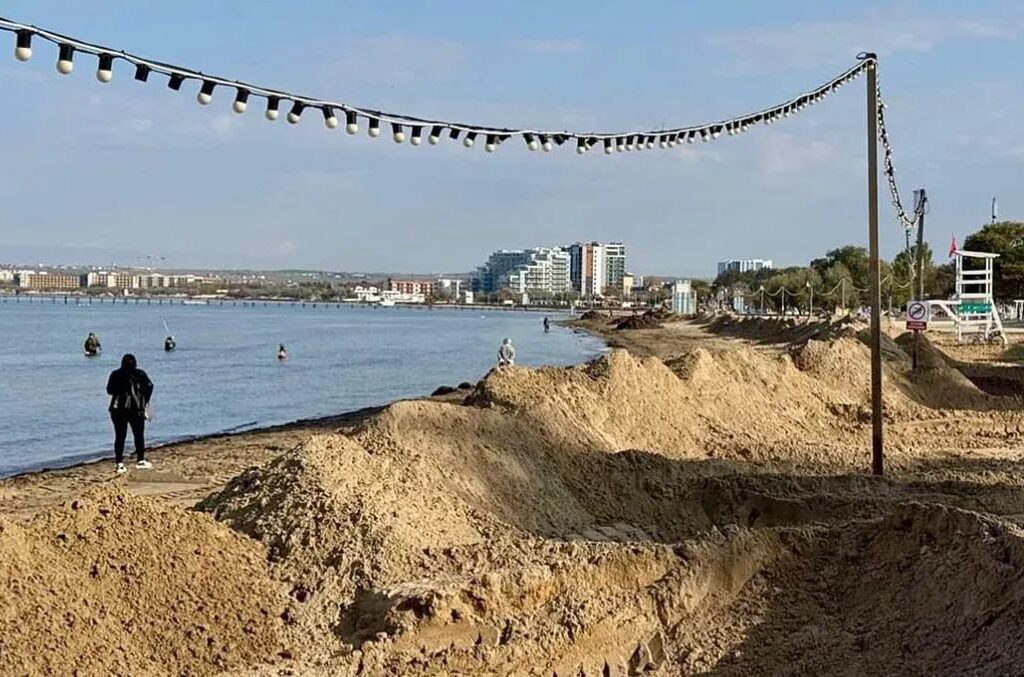
But by July, the end of the epic on the development of 5.8 billion rubles on the “construction and installation of cofferdams” through the Tyumen structure “Mostostroy 11” is not expected, despite the fact that the Kremlin “gave the regions” the command to “launch the resort season” on the Black Sea coast in June “at any cost”.
However, as the media reported, another, “profile” vice-prime minister, Dmitry Patrushev, son of the odious special services officer, secretary of the Security Council and chairman of the aggressor’s naval board, Nikolai Patrushev, was “technically removed” from “appropriating” all “anti-mazut” budgets in favor of the aforementioned Savelyev.
Experts did not rule out that the absence of a couple of “mazut” billions in the Patrushevs’ “family budget” could lead to their “appropriate steps” towards happier “disaster liquidators,” which should be expected this summer.
At the same time, the lawsuits that began in 2025 with the recovery of damages against shipowners and insurers in the courts of the Krasnodar Territory in favor of the Russian state structure “Maritime Rescue Service” and the administrations of Anapa and Temryuk municipal districts completely left “overboard” the damages caused by the environment of the occupied territories of Ukraine, in particular Crimea, where they are known to be of a billion-dollar nature.
In Crimea, the local Russian “republican government” only announced the allocation of 4.8 million rubles to the “district authorities” for “compensation of expenses related to the elimination of a man-made emergency of a regional nature, associated with the pollution of the Black Sea water protection zone with oil products”.
But this is not about compensating for the losses of businesses, the population, or even the occupation structures, but about “keeping afloat” a site located near the city of Shcholkine, where contaminated soil and biological remains collected after the tanker disaster from all over the Crimean coast were loaded.
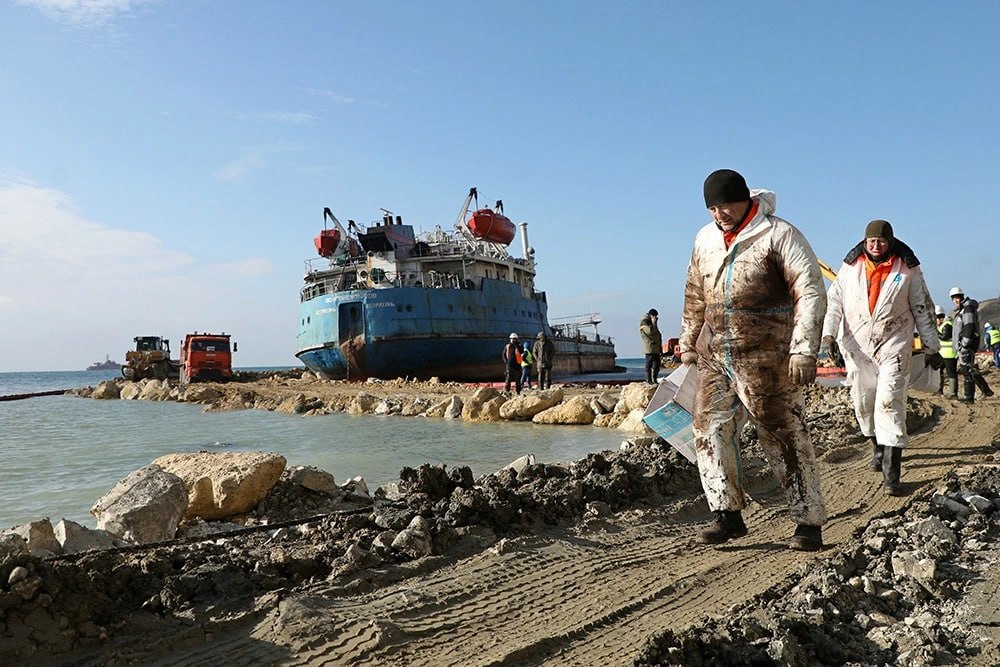
At the same time, as the authors wrote earlier, this site, located near the ruins of the Crimean NPP, was not equipped and became a source of secondary contamination of the soil and the coast of the Sea of Azov even before the occupiers began reporting on “partial processing of the collected waste.”
And in the Krasnodar Territory, the described lawsuits in cases A32-282/2025, A32-13463/2025 and A32-33459/2025 in the spring of 2026 partially reached a dead end in the court of cassation.
Among other things, it became unclear how much fuel oil was actually pumped out using cofferdams, which the “VK Glubina” structure allegedly did to pump out fuel oil at sea, and from the stern of one of the tankers thrown ashore, which was done by the “OTEKO-Portservice” structure.
In addition, the very methodology for calculating damage under Russian laws and the position of the local constitutional court provides only for a “conditional assessment of damage”, and certain expenses such as payment for workers’ work in the conditions of liquidation of the consequences of the disaster remained outside the regulatory protection.
But the main headache for Russian courts was the requirement of shipowners and insurers to establish “funds for limiting liability for damage from oil pollution caused by a tanker”.
This procedure was provided for by the Russian Merchant Shipping Code, but before the disaster neither shipowners nor insurers had established the corresponding funds, contrary to the requirements of the International Convention on Civil Liability for Oil Pollution Damage (CLC) of 1992.
At the same time, shipowners and insurers were shifting this obligation, which they had already mentioned in 2025, among themselves in the courts, and the Krasnodar arbitration courts themselves for some reason decided to apply to the cases not the aforementioned convention, but another one, the International Convention on Civil Liability for Bunker Oil Pollution Damage (BUNKER) of 2001.
However, these courts subsequently involved the International Oil Pollution Compensation Fund (IOPC), established by the 1992 Convention (FUND), as a third party in the cases. In fact, the IOPC is an international organization with appropriate immunities, and it is unlikely that it would have participated in national proceedings, even if it had known about their existence, which there are reasonable doubts about.
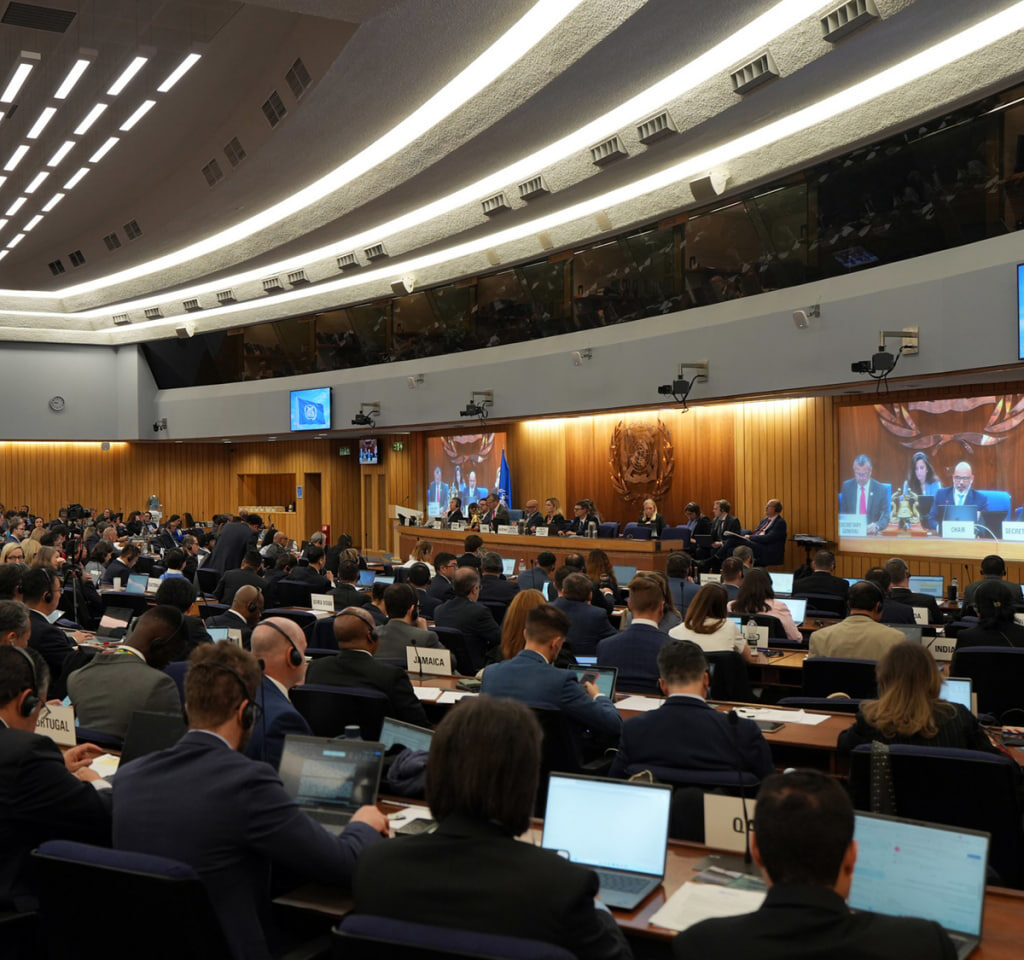
At the same time, Russia informed the IOPC about the disaster, but the information published by the Fund on this event indicates a clear underestimation by the Russians of its consequences; for example, it is stated that only “25 tons of oil from seawater”, “330 kilograms by hand by divers” and “172,094 tons of contaminated sand and soil” were allegedly collected, with a subsequent increase of this figure to 183,000 tons, while nothing about cofferdams is indicated on the IOPC website at all.
Obviously, these figures do not include statistics on the occupied Crimean peninsula, at least. Moreover, in November 2025, the Russian delegation stated at a meeting of the IOPC Executive Committee and in “informal discussions” with the IOPC Director that allegedly “the issue of submitting a formal application” to the Fund “is still under consideration, as the decisions concern various authorities”, and that it “does not have any additional information on when or whether such an application will be submitted at all”.
It is noteworthy that the Russians tried to hide not only in the IOPC, but also in their own media space, the involvement of the “VK Glubina” structure in the project with cofferdams and pumping out fuel oil.
The relevant firm, which “emerged” in the tanker case into the public domain solely due to the described shifting of responsibility in the Krasnodar arbitrations, was “registered” in the form of two identical clones with codes 9110019709 and 9110027322 in occupied Yevpatoria by Ryazan native Elena Danilina, Crimean Sergey Kolomytov, and Krasnodar resident Alexei Lebedev, and had a turnover of more than 640 million rubles in 2025.
Before the occupation of Crimea, “VK Glubina”, where the chief engineer was a resident of St. Petersburg Dmitry Gaponov, was primarily engaged in operations to raise sunken ships in nearby waters, and since 2015 it has participated in work on the Kerch Bridge on “underwater installation and repair of supports” and on the “Russia-Crimea energy bridge” during the “laying of protective structures for underwater cables”.
Russian sources indicate that “VK Glubina” has been “the main partner of the Russian Geographical Society for a decade in terms of ensuring marine work in the Black Sea, providing diving services, providing vessels and equipment”.
We add that research by European intelligence agencies, in particular in Norway and the Netherlands, indicates that Russian special services use the Russian Geographical Society (RGO) as a cover for intelligence activities and recruiting agents who collect data on military facilities and logistics. In particular, in 2023, Russian intelligence agents under the guise of RGO employees tried to recruit a resident of Norway, offering to photograph military facilities near the cities of Alta and Tromsø.
The declared characters are most likely nominal figures in “VK Glubina”, since the aforementioned Kolomytov was a senior diver in the crew of the sea tug “Mirny” in 2015, and Danilina distinguished herself as the director of the Sevastopol structure “Praga”, which is engaged in the restaurant business, and the boutique hotel “Mezhvodnoye Bely” is also registered with her.
And Danilina’s accomplice in the St. Petersburg waste disposal business, the aforementioned engineer Gaponov, for whom he previously organized in the Russian “northern capital” the lifting and disposal of the remains of fuel oil barges in the area of the Kirov Plant, the disposal of the remains of ships in the area of Kanonersky Island and Ugulnaya Harbor, base of the auxiliary fleet in the city of Lomonosov, had another dimension of biography.
Among other things, Gaponov became in 2008, together with lawyer and professor Alexei Tarushkin, a co-founder of the St. Petersburg “Management Company PM”, which was engaged in “legal assistance in the municipal sector.”
And already in 2009, Tarushkin was arrested on suspicion of organizing a series of murders of St. Petersburg pensioners who owned valuable real estate, while no one ever found their bodies. However, Tarushkin, who for some time was known at the Russian Law Academy of Ministry of Justice, where he taught, as a “talented student” of the unchanged head of the Investigative Committee of the Russian Federation since 2007, Aleksander Bastrykin, still ended up behind bars for 22 years. This happened because of his participation in the murder of the head of the St. Petersburg structure “Electrozashchita” Lyubov Kryukova in favor of her deputy Vladimir Morozov.
In this story, despite the obviously large participation of accomplices, Tarushkin clearly became a “scapegoat”, and the Russian press of that time linked the activities of this gang of killers with high-ranking ranks of Russian penal structures.
This whole story about Russian tankers, their insurance epics, the activities of the Fund and structures affiliated with Russian intelligence such as “VK Glubina” is not just an interesting example.
After all, the global tanker fleet transporting Russian oil and petroleum products has been undergoing a certain “regrouping of jurisdictions” in recent years, associated with the sanctions policy and the accumulation of maritime safety violations on these vessels.
Global analysts indicated that during 2025-2026, at least more than 1,400 vessels, and probably up to 1,600 tankers, were involved in the transportation of sanctioned oil. Such shadow transportation accounts for at least 17-19% of the total tanker tonnage in the world.
By 2022, two-thirds of the currently sanctioned ships belonged to more or less identified companies with beneficiaries in Russia, Iran or Venezuela. But the flags of the tankers in question were traditionally convenient and frequently changed, but at least they existed in reality, which created significant risks of proper investigation in the event of an environmental incident and raised huge questions about the likelihood of compensation for damage, but did not exclude these processes by definition.
Later, the shadow tanker fleet began to switch to the flags of maritime administrations that were in the “black part” of international ratings, and then the operators of these vessels began to increasingly use purely fake flags, for which no maritime administration is responsible. This completely excluded the possibility of any investigation into the facts of marine pollution and made the issue of any compensation dependent solely on the wishes of the insurer and the shipowner.
At the same time, in 2026, such schemes had already led to the use by the tankers of the shadow fleet not only of fake flags, but also of fictitious insurance certificates issued by non-existent and unauthorized structures.
A striking example was the expert investigation into the use by tankers carrying Russian oil of “insurance certificates” from the non-existent “German company” “Seaguard P&I”, under the guise of which a group of businessmen operated from the “Syrian Chamber of Shipping” affiliated with Russian special services.
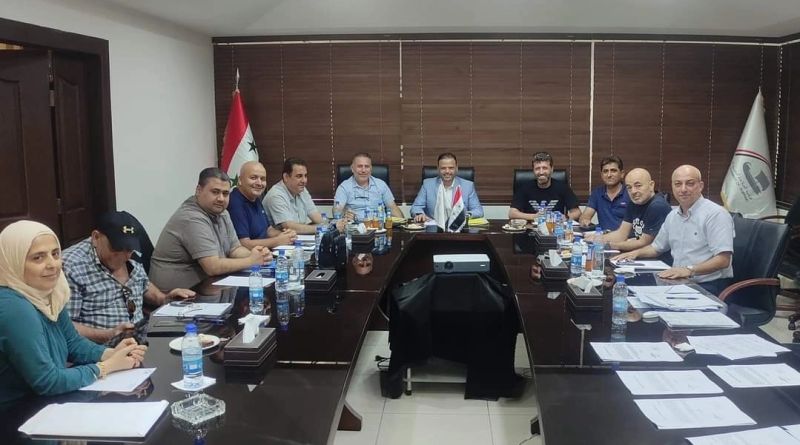
The experts pointed out that the fake “insurance” of the tanker makes all subsequent documents issued for the vessel, both technical and commercial, at least dubious. It is also obvious, the investigators added, that the imitation of the tanker’s “insurance” grossly violates the requirements of the MARPOL convention, in terms of the lack of coverage for the risks of oil pollution of the sea.
“Gosships Intelligence” wrote about at least five sanctioned tankers with “Seaguard P&I” “certificates,” adding that the vessels exhibited “classic shadow fleet behavior that makes them so dangerous,” including performing ship-to-ship oil transfers at anchor and other environmentally unfriendly practices. They noted that the International Group of P&I Clubs, which covers about 90 percent of the world’s tonnage, and its members, key marine insurers, had previously stopped insuring shadow fleet tankers altogether.
In response, Russia’s sanctions-hit “Ingosstrakh”, backed by a state-owned reinsurer, the same “Russian National Reinsurance Company” described above, has begun issuing tanker shipowners policies that are supposedly “equivalent to P&I” but contain a “sanctions exclusion clause.” This clause voids any claims for oil sold above the G7 price limit, meaning that a ship caught violating the same sanctions will have its insurance coverage void at the very moment it is needed for compensation.
As maritime commentators, including “Baird Maritime’, have noted, this is precisely how large an oil spill from a shadow fleet may be that it may not be compensated at all, even when the ship has the insurance certificate.
Even less real are the little-known “alternative” insurers of shadow tankers, registered purely formally in jurisdictions such as Gabon to Cameroon, documented in the “Asia Sentinel”, and the use of fakes such as “Seaguard P&I” forms such a “scale of underlying risk that turns this story from a story of fraud into a story of coastal disaster”.
Accordingly, such semi-fake insurers are directly involved in the destructive impact of shadow fleet tankers in terms of the risks of oil spills, accidents due to unsatisfactory condition, illegal transshipment of oil products without environmental control on the high seas, disabling of ship identification systems, use of ships with dubious classification and violation of technical supervision, damage to marine ecosystems, etc.
In the above-described degradation of insurance of tankers of the shadow fleet, a striking example is the situation with the vessel “Paz” (formerly “Aulis”), IMO number 9233765, which in March 2026 was heading from Murmansk to China with a cargo of 140 thousand tons of Russian oil from “Gazpromneft” and a “certificate” from “Seaguard P&I”.
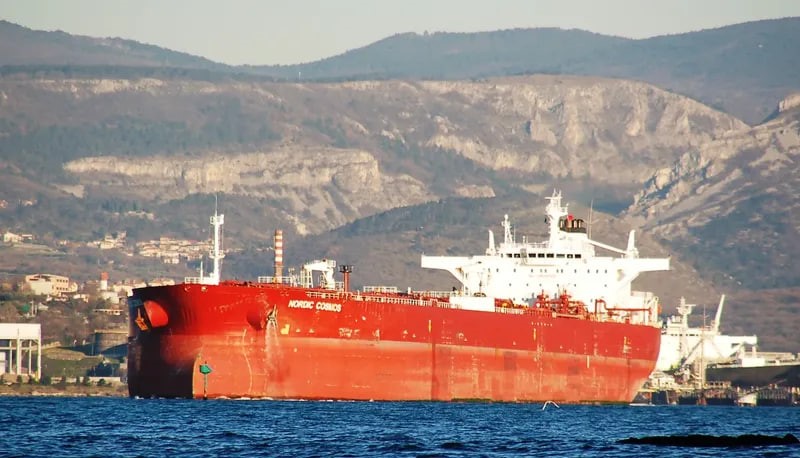
This piece of paper was replaced with documents from the Russian “VSK”, the same insurer of the tankers lost in the Kerch Strait, “Volgoneft”, which is now demonstrating the wonders of legal balancing in the Krasnodar arbitration.
Additionally, experts state that even not fake, but Russian or African insurers declare payment limits of $5 to $50 million, which is an order of magnitude lower than the standard coverage of over a billion dollars in standard proformas of P&I insurance policies for major tankers.
At the same time, British parliamentary experts estimate the potential cost of cleaning up the consequences of one large spill by a shadow fleet tanker at around a billion pounds, and in the absence of valid P&I coverage, these costs will fall on the coastal state and its taxpayers.
At the same time, a series of detentions of shadow fleet tankers for using fake documents on the nationality (flag) of the vessel and the growing prospects of such processes led, as of mid-2026, to the mass transfer of shadow fleet tankers to the Russian flag.
This does not increase the likelihood of payments and compensation for oil spills, but it does mean that now the Russians will demand, if such a tanker causes environmental damage, the “right to investigate the incident” and offer to eliminate its consequences “competent and experienced structures” closely linked to the Kremlin’s special services, such as the “VK Glubina” described above.
In addition, potential cases of recovery of damages from the owners of such tankers are being transferred to Russian courts and arbitration, and the current epic with the Volgoneft tanker cases is a good example of how this can end. It cannot be said that the relevant challenges are being ignored by international structures.
For example, the activities of the shadow fleet became the subject of a special thematic meeting of the OSCE Economic and Environmental Committee in June 2025.
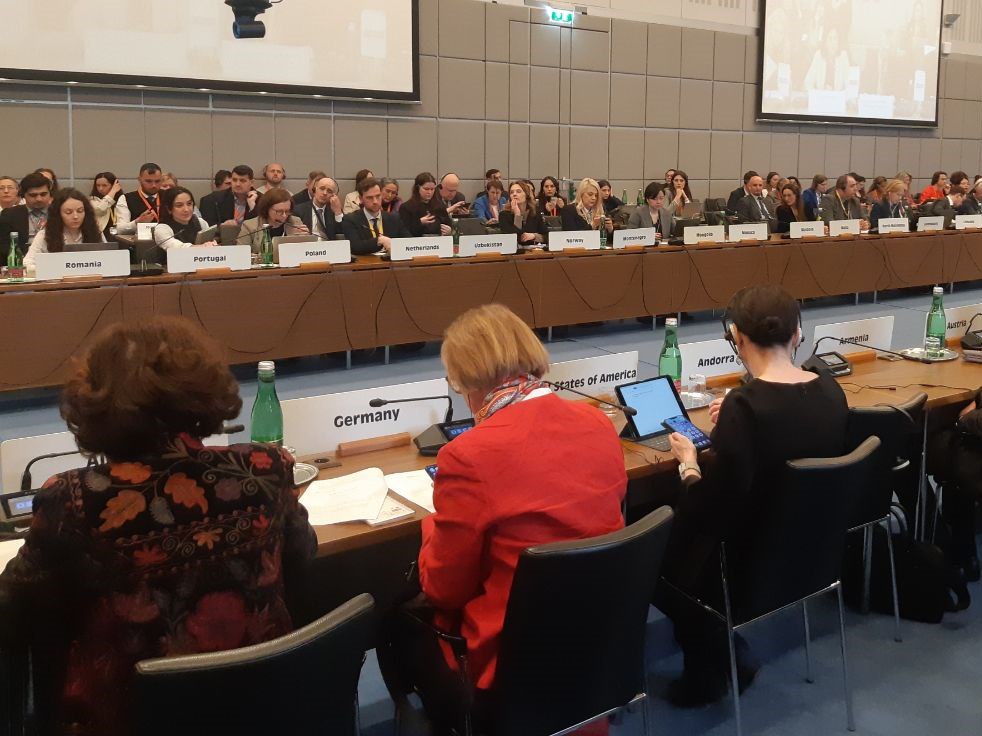
It was already stated then that these tankers do not have proper insurance, in particular against losses such as oil spills, and therefore the environmental consequences of any potential accident, similar to the one that occurred with the Russian “Volgoneft” tankers in the Black Sea, will have to be eliminated by the affected country itself.
In this regard, the story of the sanctioned tanker “Sofia” IMO 9211999 under the Russian flag, which in April 2026 was likely the source of the oil spill near Anapa, is noteworthy. This vessel is controlled by a subsidiary of the “Novoshakhtinsky Oil Products Plant”, “Rosewood Shipping”, and at the time of the incident it had a MARPOL certificate of compliance issued by the “Russian Maritime Register of Shipping”.
In recent months, there has been no information about any investigation of the relevant case by the Russians and about any fines or compensation payments.
This case shows that in the event of sea pollution caused by tankers of the shadow fleet, Russia will not only sabotage the issue of compensation or investigations, but also ignore the very fact of the incident. Thus, in the absence of a systematic response to environmental risks from the activities of the shadow fleet, governments and international structures may sooner or later find themselves in a situation of global catastrophe and still take appropriate measures, but under completely different circumstances.