Attacks on tankers of the so-called shadow fleet and their active detentions have attracted significant attention and raised the stakes in one of the world’s major markets.
What began as a response by Ukraine and its partners to Russia’s aggression and the main source of financing for its military potential has led to global events.
That is why our Association’s expert Eduard Pleshko tried to consider the problem more broadly and comprehensively.
The purpose of this analysis is not to provide precise quantitative indicators, which are often deliberately distorted or carefully concealed, but to clarify the overall situation in the dynamics and establish important aspects that are not always properly assessed.
In 2025, the world produced about 5.2-5.3 billion tons of oil, which slightly exceeds the forecasts of the influential International Energy Agency (IEA).
Maritime transport remains a key artery of the energy market, more than 60% of all produced oil and petroleum products are transported by sea, in 2025 it is approximately 3.2-3.3 billion tons.
If we operate with the average daily production figures in barrels established for specialists, then last year instead of the IEA forecast of 104.8 million barrels per day, we have an indicator of 106.1-106.2 barrels.
The number of barrels in a ton depends on the density of oil, in particular, one ton of light Brent oil contains approximately 7.62 barrels. At the same time, one barrel, which has a volume of 159 liters, weighs a different number of kilograms, and for the same light oil it is about 131.2 kg.
Although total global geological reserves are dominated by heavy oil with high viscosity and density, the reserves of which are estimated at over 810 billion tons, due to the complexity of production and processing, current global production and consumption are dominated by light and medium grades (e.g. Brent, WTI), which are more economically viable and technically easier to obtain as fuel.
Another important thing is that the current level of production does not allow for a sharp change in the number of tankers involved in the logistics chains of the oil industry.
According to 2022, the Equasis register in the world counted 14,616 tankers and chemical tankers, later, when the statistics became less reliable, according to experts’ estimates, by the beginning of 2025, the registers of maritime registers contained about 3,000 oil tankers, about 10,000 chemical tankers (for the bulk transportation of any liquid product, in particular oil, subject to certain conditions), and about 4,700 LNG and LPG gas tankers.
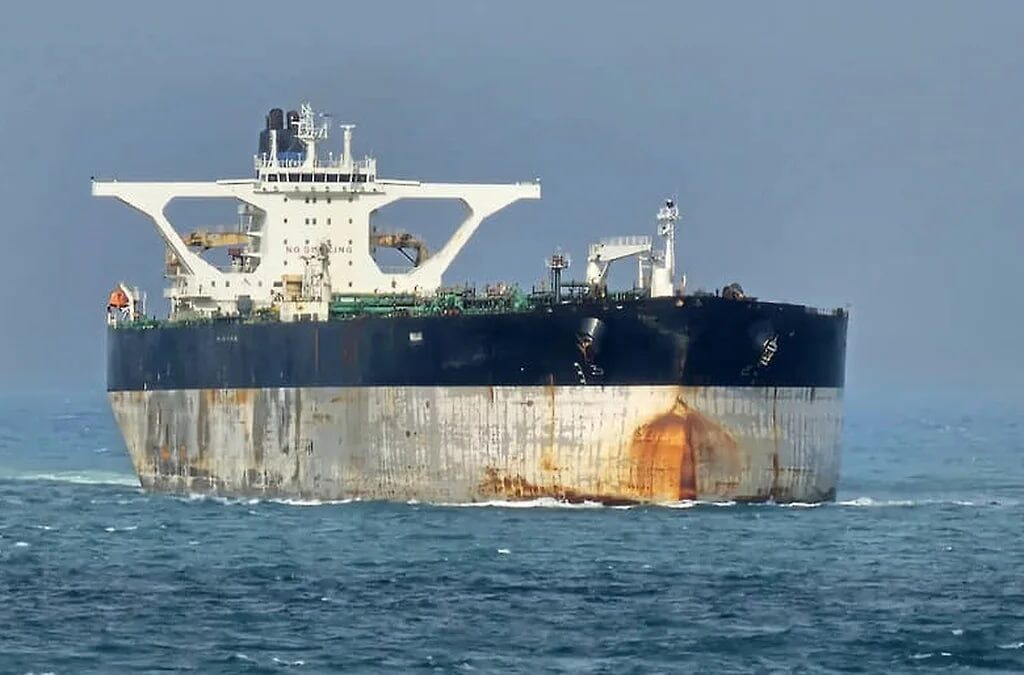
Tankers transporting oil purchased for more than $ 60 per barrel, subject to sanctions and requiring concealment of its movement, have been called the shadow fleet since December 2022.
The maritime transportation market is mainly divided into tramp and liner shipping.
At the same time, petroleum products are most often transported by tramp vessels that operate irregular routes. In 2025, such a shadow fleet carried out approximately 15% of all maritime transportation, i.e. about 0.5 billion tons, which is 9% of total production.
Taking into account the estimates of the world-class analytical structures KSE Institute, Kpler and Lloyd’s List, during 2025-2026, more than 1,400 vessels were involved in the transportation of sanctioned oil.
Some other sources estimate the number of such vessels at even 1,600 units.
According to average estimates, it is generally accepted that shadow transportation is carried out by at least 17% and probably up to 19% of tankers out of the 13 thousand above-mentioned oil and chemical carriers, i.e. every sixth one.
It is worth considering that the shadow fleet actually serves the interests of several countries under sanctions. In particular, these are sanctions against Russia to encourage an end to the war in Ukraine; against Iran to ensure nuclear disarmament; Venezuela to support the transition of power; and Libya to stabilize the country and prevent the theft of national wealth by parallel institutions and armed groups.
They also mention oil sanctions against North Korea, but they are fundamentally different, as they are imposed not on the production and export of oil, but on the contrary, on its import into the country.
It is also important to understand that coastal terminals through which sanctioned oil is shipped may distort or not provide statistics, and the further algorithm of actions involves transshipment from ship to ship (Ship-to-Ship; STS-transfers) in the open sea, after which the oil reaches buyers on other ships with documents that are supposed to hide its real origin.
The use of such schemes, already in 2023, led to a fourfold increase in demand for sea tankers, which is one of the important consequences of the war in Ukraine, which affected this segment of the world fleet.
Before the introduction of sanctions, Russian oil exports were a “legal business” provided by Western tankers, mainly Greek, and oil trading (buying/selling futures on exchanges and bills of lading off exchanges for the main grades in order to profit from high price volatility) was conducted mainly from Switzerland, the marine insurance market historically remained in the UK.
If we rely on data from S&P Global Inc (SPGI) – a well-known analytical structure in the field of financial research of raw materials and global capital markets, then by 2022 two-thirds of currently sanctioned vessels belonged to companies with beneficiaries in Russia, Iran or Venezuela, now two-thirds of the owners are unknown, and the shadow fleet increased by almost one and a half times in 2025 and only Russian oil bypassing Western sanctions is transported by 80%.
According to the US Center for Strategic and International Studies, Russia’s shadow fleet transports 3.7 million barrels per day, which is 65% of all its maritime exports, which provides it with income of up to 100 billion dollars per year. Also, 20 billion a year is the Russian Federation’s income from gas sales.
Why is it the shadow fleet of Russia that causes the most acute reaction? One of the answers is related to the volumes, the same 3.7 million barrels per day is at least 70% of the dark schemes. Iran provides transportation from 1.2 to 1.5 million barrels per day, that is, 2.5-3 times less, that is, 20-25%, Venezuela 0.6-0.8 million barrels per day, that is, 5-10%, and Libya – 1-3%.
Operations with the above volumes require Russia to use up to 1,200 tankers of all types from Aframax to VLCC, Iran needs up to 300 tankers, Venezuela up to 150 and Libya up to 30, a maximum of 40 mostly small tankers.
The figures used are approximate. The same volume of oil can be transported by different types of tankers from small-tonnage general purpose (GP) to large-tonnage crude oil (LR).
Therefore, it becomes clear why the determination of the total need for tankers for the shadow circulation of oil and petroleum products may be different.
In world practice, the division of tankers by deadweight (full deadweight, “DWT”) is accepted, when bulk carriers are divided into small-, medium-, large- and super-tonnage.
The most commonly used classification of bulk tankers is the AFRA (Average Freight Rate Assessment) scale, developed by Shell Oil in 1954, which was the first system to define tankers of different sizes.
However, after the New York Mercantile Exchange began trading crude oil futures in 1983, it became difficult to determine the exact price of oil, as it changed with each contract. Shell and British Petroleum were the first companies to abandon the AFRA system in 1983, followed by other US oil companies. However, in some cases the system is still used to this day.
It is worth considering that later a flexible market scale for classifying bulk tankers was created, which is based on typical routes of their movement, in particular the possibility of passing certain straits, canals and locks.
According to this classification, vessels with a deadweight of 50-70 thousand tons are classified as “Panamax”, 70-120 thousand tons as “Aframax”, 120-200 thousand tons as “Suezmax”.
According to our estimate, the total world fleet of oil tankers and chemical tankers that can be used to transport oil is approximately 8.9 thousand units.
According to the 2022 database of the Equasis register of large oil tankers with a deadweight of more than 25,000 metric tons, there were about 6.5 thousand vessels, including approximately 2.4 thousand with a deadweight of more than 60,000 metric tons.
The elite among them are VLCC/ULCC vessels. ULCC (Ultra Large Crude Carriers) vessels are very rare, many of them have been decommissioned or converted, for example, into FSOs (floating storage facilities). Although the Equasis (Electronic Quality Shipping Information System) information system lists 56 vessels of this type in the “on the move” status, many experts agree that only 4-6 ULCC tankers are currently in operation, such as “TI Europe”, “TI Oceania”, etc.
At the time of this analysis, there were approximately 870 VLCC (Very Large Crude Carriers) vessels.
According to an independent estimate in September 2025 of the shadow fleet of 980-1000 tankers with a total deadweight of 127 million metric tons, which was 18.5% of the global oil fleet, the number of VLCC and ULCC tankers in shadow use in the shadow fleet was 20-30% of the global VLCC fleet.
Subsequently, various sources provided directly opposite information regarding the real growth/reduction rates of such a fleet, including due to the growth of demand in Asia, the VLCC fleet grew by 10%, affecting fuel prices, since one VLCC tanker carries as much oil as would be enough to refuel 5 million cars per year, and the delay of one giant can raise stock prices by 5%.
These vessels should be analyzed first and are the main targets in case of their transition to the shadow fleet.
The detailed explanations provided above lead to a logical understanding that countering shadow transportation should be directed, first of all, against large tankers, then the impact will be more effective.
The above also allows us to specify the assessment of the value of a lost or blocked asset, as in the incident with the 50,000 deadweight chemical tanker “Mersin” IMO number 9428683, which had previously repeatedly called at the port of Novorossiysk, in August 2025 visited the Russian port of Taman, after 9.5 thousand km of sea crossing, if measured from Crimea, began to settle off the coast of the African country of Senegal, and for some reason suddenly began to sink. The decommissioning, even temporary, of such a large-tonnage tanker of class 1 has significant consequences.
Similarly, the detention by France in January of this year of the tanker “Grinch” IMO number 9288851, with a deadweight of 115,635 tons, i.e. type LR2, and its removal from the route with the escort of the national fleet to the parking area for the purpose of continuing inspections, is a large-scale event.
Perhaps it is time for the world’s maritime organizations to recognize that fraudulent schemes with flags and registrations simply speculate on freedom of navigation and should be recognized as extraterritorial crimes.
Counteracting large-tonnage tankers allows you to save another resource. Ideally, the transition to further personal sanctions and/or another procedure for prosecuting some crew members and crewing requires painstaking work to identify and hold accountable the command staff of only one sanctioned vessel: captains, senior mates and preferably senior mechanics (who agree to organize the operation of complex systems of vessels aged 20+ years, which creates environmental challenges and threats of disasters), not one, but at least 2-3 ship crews during the year, crewing officials who recruit ship crews and directly contribute to the violation of the sanctions regimes, which requires processing about 10 thousand such persons.
Therefore, our assessment is that when creating a register to counter the shadow tanker fleet, synchronized for all sanction lists and jurisdictions, it should include at least 10 thousand officials of the shadow fleet and related structures.
Coordinated preventive measures should be taken against such persons as the main violators of the sanctions regimes, including preventing their free movement around the world to continue their professional activities.
Also, maritime work documents and certificates on relevant qualifications should not be recognized as valid and should be withdrawn on this basis if they are provided.
The use of a shadow fleet allows ignoring the “Price Cap”, in particular, if a legal tanker is obliged to transport oil at a price not higher than 60 US dollars per barrel, then a shadow one transports it at a market price, for example, 75 dollars per barrel.
At the end of 2025 – beginning of 2026, there will be a clear gap in prices for ship freight, as a key element of maritime logistics, which includes the cost of transportation, often fuel costs, port dues and insurance.
The shadow fleet is forced to work with the so-called “sanctions premium”. For the Baltic to India route, the average market values last year were at a daily rate (Aframax) for a legal tanker of 35-45 thousand US dollars, for a shadow fleet tanker 75-90 thousand dollars, an actual difference of 100%.
The daily rate for a legal VLCC tanker was 50-65 thousand dollars, and for a shadow fleet 110-130 thousand dollars, with an actual difference of 115%; while the cost of insurance, which is usually 0.2-0.3% of the value of the vessel, jumped to 0.8-1%.
In addition, due to the impossibility of using the Suez Canal (due to sanctions or security risks), shadow tankers often bypass Africa, which increases the voyage time from 25 to 45 days and automatically doubles the total freight cost.
However, even with an overpayment of $10 million for freight per voyage, additional profit from selling oil above the established “price cap” from a supertanker can bring the exporting company up to $15-20 million in net profit on one supertanker.
The situation around the temporarily occupied Crimea and hostilities in the Black Sea only raise the stakes for the Azov-Black Sea region.
The next question that is desirable to understand is whether the measures taken are effective and whether they should be continued? Our opinion is that, of course, the annual loss of $100 billion by Russia is extremely painful for the budget and devastating for the industry.
Why, despite the achieved effect, do the opportunities for financing the war remain? The answer can only be obtained by taking into account the complex nature of the economy.
From our other analyses, it is known that after the war in Georgia, Russia most likely worked out a promising 10-year plan, which provided for the seizure of Crimea in the first five-year plan (medium-term perspective), and the seizure of all of Ukraine in the second five-year plan (long-term perspective).
In particular, it is well known that after the occupation of Crimea, the Russian authorities, through significant cash injections into “social and pension programs”, tried to create a false advantage compared to Ukraine’s capabilities and simply bribe local collaborators.
In the next 5 years after the seizure of Crimea, Russia significantly increased the financial volumes of the National Welfare Fund (a separate source of savings and financing from the budget, which is much better hidden in the case of expenses) and introduced a three-year surplus budget (for the economic development of the country, an annual budget with a deficit of 3-5% is usually planned).
Accumulations for the upcoming war were carried out at the expense of the oil and gas industry, which completely filled the Fund and a third of the annual budgets.
The implementation of the plans was affected by the global coronavirus pandemic of 2019, which rolled back the Russian budget to a deficit, and the implementation of the aggressive plans began after the budget was restored to a surplus.
The blow we have considered to the oil and gas industry would probably have already broken Russia’s spine, but its expansion with the support of undemocratic ruling regimes and the subsequent plunder of the national resources of the countries of the Global South, as an additional resource well hidden from official statistics, as well as the use of schemes for the sale of gold and diamonds from its own reserves, postpone the obvious.
When a lost gold bar was found at the Russian Pulkovo airport after one of the cargo flights, experts began to actively analyze this market segment and tried to calculate the economic effect of such export transportation operations, finally coming to the conclusion that the loss of $ 100 billion on oil schemes per year was compensated by $ 217 billion only due to the revaluation of the value of gold and the activation of its use as a means of payment.
Previously, most of the gold from Russia was exported to the UK. After sanctions were imposed on the export of Russian gold in June 2022, the largest amount of gold was exported to the UAE, even Russian statistics, which were not hidden in time, showed that 75.7 tons of gold were exported there from February 24, 2022 to March 1, 2023.
For comparison, currently available data shows that in 2025, the physical volume of gold exports from Russia to China increased 9 times and reached 25.3 tons, which is 800% more than a year earlier.
Although the further potential of such operations is under great question, by a “strange coincidence” it is in the UAE (excluding China) that at the moment the largest number of banks service oil transactions, the largest number of shell managers and operators of the shadow fleet, and Fujairah – an emirate in the UAE, the only one located on the coast of the Gulf of Oman of the Indian Ocean, and not the Persian Gulf, has become one of the largest global hubs for blending (mixing) Russian and Iranian oil with other grades, after which it is passed off as “Singaporean” or “Middle Eastern” ones. The volume of transshipment of oil of dubious origin was estimated at 20-30 million tons per year.
Significant resources of the Russian intelligence services are directed to ensure such operations, and the need to maintain their positions while simultaneously wanting to reduce the pressure of Russia’s opponents on the UAE authorities is resolved by taking foreign policy measures to transform this country into a negotiating platform, which makes it necessary to diplomatically bypass a wide public discussion of the UAE’s participation in the operations of the shadow fleet.
After that, the news that when the US detained a Russian tanker of the shadow fleet, in addition to parts for drones and a million euros in cash, 1.5 tons of gold were found on it looks somewhat different. In order to save such a vessel, the Russians planned to send naval ships.
The US did not comment on this information, but did not deny it either, but the events in Venezuela showed that the US, by counteracting the shadow fleet, managed to significantly influence Russia and China.
Thus, Russia (mainly through Rosneft) invested about 17 billion US dollars in the Venezuelan oil industry, which was directed to supporting production (Venezuelan heavy oil is technologically close to certain Russian varieties) and modernizing infrastructure. Russian assistance made it possible to maintain production at the level of about 800 thousand barrels per day, providing the competencies that Venezuelans lost after the nationalization of the industry and the withdrawal of American companies.
Currently, these investments are assessed as “covered with a copper basin.” The US operation in January 2026 and the overthrow of the Maduro regime effectively deprived Russia of control over these assets, and the new government and US sanctions make it impossible to return these funds or receive profits from joint production.
The problem of Chinese investments in Venezuela looks even more extensive. Based on analytical reports from leading centers (USCC, CSIS, Energy Policy at Columbia University, ICDS), it can be understood that investments in the Venezuelan oil industry and economy are generally divided into direct investments and loans in exchange for oil.
From 2000 to 2023 (according to the China Global South Project), China provided Venezuela with about 106 billion US dollars. As direct investments, China’s state-owned oil giants invested about 4.6 billion US dollars directly in oil exploration and production. In particular, China Concord Petroleum planned to invest another billion dollars by the end of 2026.
As of early 2026, Caracas’ debt to Beijing was estimated at $10-12 billion. Most of this debt was serviced through oil supplies, about 50,000-100,000 barrels per day.
We can identify three aspects of the US’s achievements in this battle of the tanker war.
First, the political ones, in which China and Russia look like “powerless patrons”. Maduro’s capture took place just a few hours after his meeting with the Chinese delegation, which in the eyes of the Global South undermines China’s image as an alternative security guarantor, and the situation with the capture of tankers of the Russian shadow fleet after warnings with direct threats to use the Russian Navy in response, does not require any comments at all.
Secondly, financial, related to the threat of China not repaying the aforementioned $10-12 billion in debt, and Russia losing $17 billion in long-term investments if the new Venezuelan government, supported by the US, refuses to recognize previous agreements concluded under Maduro. In any case, in January 2026, the Venezuelan National Assembly has already voted for a large-scale reform of hydrocarbon legislation, which was launched against the backdrop of an agreement with Washington to supply 50 million barrels of oil to the US.
Thirdly, reputational and operational for the maritime operators of the shadow fleet, when, as a result of the US oil embargo, Chinese and Russian supertankers, recorded in January 2026, are forced to turn around in the Atlantic and bear additional losses from the disruption of contracts and the established logistics scheme.
At the same time, the Baltic Straits are the gateway through which the main flow of the shadow fleet passes. In the Leningrad region of Russia, the largest Russian oil loading port on the Baltic Sea – Primorsk, as well as the port of Ust-Luga are located. These two ports alone are capable of transshipment from the Baltic pipeline system of 75-85 million tons of oil annually.
For comparison, the port of Novorossiysk in the Black Sea provides exports of 45-50 million tons, the port of Kozmino on the Pacific Ocean about 40 million tons annually.
The Baltic Straits are the most critical point for Russian exports from the Baltic Sea, through them in 2025 passed more than 110 million tons of Russian oil, in particular up to 70%, i.e. about 70-77 million tons of oil – by ships without Western insurance.
In December 2025 alone, it was recorded that 46% of oil transported by ships under false flags, i.e. up to a million tons per month, passed precisely through the Baltic Straits.
We must clearly determine: the shadow tanker fleet of Russia is a threat not only to Ukraine, it is a source of income for further financing of the hybrid war in Europe.
Given the largest flow of oil from the Baltic and the gradual increase in counteraction to this, Russia was forced to begin demonstrating the escort of tankers by warships.
In particular, British patrol vessels tracked the movement of the Russian warship “Boykiy” together with the oil tanker “MT General Skobelev”.
At the same time, Ukraine, as a party to the armed conflict, has the right to fire on tankers recognized as a legitimate target.
The legality of actions in the event of the destruction of tankers of the shadow fleet is legally based on a combination of the fundamental right to self-defense under Article 51 of the UN Charter and the norms of international humanitarian law codified in the 1994 San Remo Guidelines on the Rules of Warfare at Sea.
The Guidelines have the status of a restatement, an official compilation of existing customary norms, and their provisions are integrated into the military charters of the leading maritime powers (USA, Great Britain, Canada). Therefore, international courts and the UN should consider it as evidence of the existence of a legal norm.
According to the San Remo norms, merchant ships of the aggressor, i.e. Russia, can be legitimate military targets under the conditions of the principle of “effective contribution to military operations” (paragraphs 40, 60), when a merchant ship ceases to be a civilian object if it makes an effective contribution to military operations.
Ukraine expressed its position: since more than 30% of the Russian state budget is directly directed to financing an aggressive war, each tanker of the “shadow fleet” transporting oil is the economic foundation of the military machine, therefore its destruction or capture gives Ukraine a clear military advantage, undermining the aggressor’s ability to purchase missiles, drones and fuel.
At the same time, the development of military operations in the Persian Gulf in 2026 becomes a new factor in the activities of the shadow fleet, both in terms of the UAE’s future position, the situation in Iran and the dynamics of oil prices, which should become the basis for separate studies.