The detention by the U.S. authorities in early January of the tanker “Bella 1”, IMO number 9230880, allegedly hastily renamed “Marinera”, with the fabrication of a Russian flag for the vessel using the infamous “Russian Maritime Register of Shipping” highlighted a rather characteristic episode.
On board the detained tanker were two Russians, whom, according to subsequent statements by the Kremlin, the US authorities allegedly “promised to return” but apparently did not do so.
At the same time, a significant number of crew members turned out to be Ukrainian citizens, and the aggressor’s propaganda hastily declared that these were supposedly Crimeans with “Ukrainian documents for convenience”, although in reality the situation with the crew there is completely different.
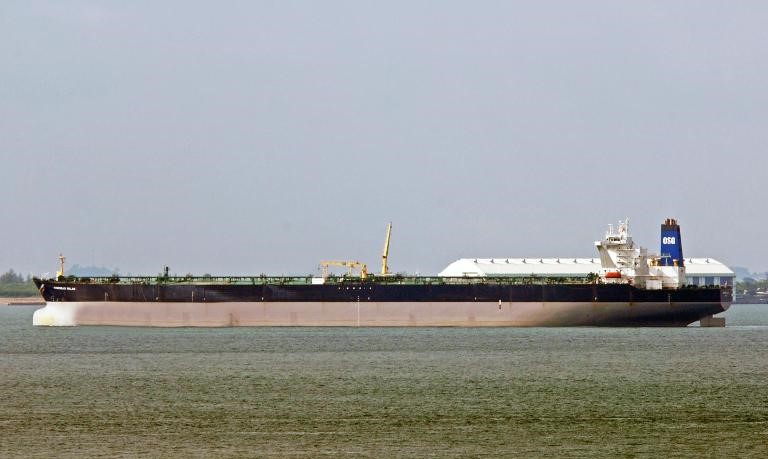
Therefore, to understand the mechanisms by which a source of petrodollars is transformed into a tool of modern maritime “hybrid warfare,” it is worth assessing the ways in which the Kremlin’s tanker crews are manned. Recruitment and employment on ships of the Russian “shadow” and “ghost” fleet formally takes place according to the same procedures as on other ships controlled by Russian owners.
The main nominal player here is Russian crewing agencies, which at the same time try to imitate “compliance with international conventions”, primarily MLC and STCW. Such crewing agencies can be affiliated with powerful Russian transport or logistics corporations (such as “Sovcomflot”, “BF Tanker”), or be “daughters” of global maritime structures (“V.Ships”, “Marlow” “CMA CGM” and so on), or be connected with the occupied maritime regions of Ukraine, primarily Crimea.
Employment is carried out through the offices of such agencies, mainly in St. Petersburg, Novorossiysk or in third countries, for example in Georgia. Regardless of which crewing company provides the corresponding employment of Russian citizens, control over its activities by the Russian special services is constant and total, while the activities of the Russian “shadow” and “ghost” fleet itself are under constant supervision of authorized officials of the Russian presidential administration (such as Denis Agafonov and Maxim Oreshkin) and federal government officials at the level of vice prime ministers (in particular Denis Manturov and Vitaly Savelyev) who are actually under their control.
Crew members are usually recruited through a system of announcements on the websites and social pages of crewing agencies, as well as on aggregator websites and through the initiative of seafarer candidates sending their own vacancies to the email addresses of crewing structures, while recruitment according to advertisements is carried out specifically for “traditional” crew member positions.
Recruitment of crew members, even “substandard” ones, that is, actually intended to perform tasks other than work on the vessel itself, outside the activities of crewing, is unlikely, since it is the crewing that ensures that the candidate obtains the necessary maritime certificates in affiliated training centers and maritime documents from the vessel’s flag administration, and also provides visa and logistical support for the employee.
At the same time, recruitment specifically for a “substandard” position must be determined by a certain logic: either commercial due to the special needs of the vessel on a specific voyage, or another one that goes beyond the scope of merchant shipping. And here, to understand the specifics of the “substandard” crew members of the Russian tanker fleet will allow us to understand the ship roles of the crews of individual tankers, such as “Boracay” IMO number 9332810 under the flag of Benin, which previously had the names “Pushpa” and “Kiwala”.
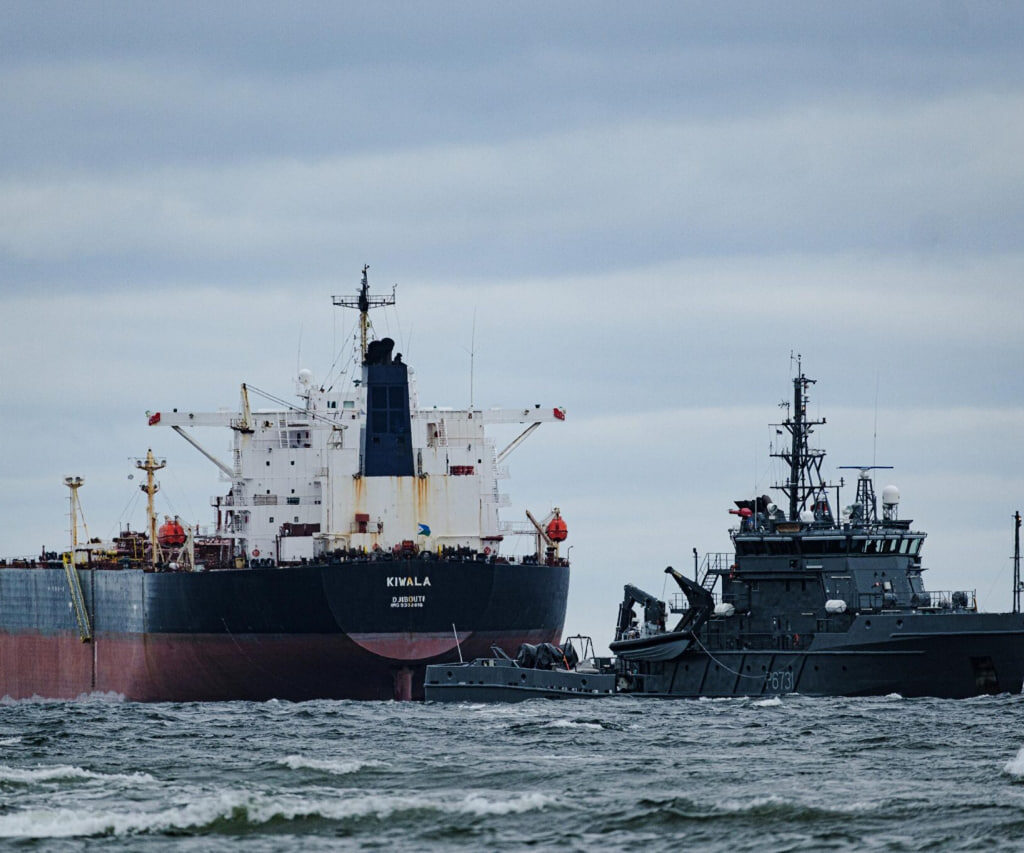
As it follows from the crew lists, “Pushpa” left the Russian port of Primorsk for the Indian port of Sikka in early July 2025; it is highly likely that the crew for this voyage was formed to board the ship at the end of June 2025 in Primorsk. Later, “Pushpa” left the port of Primorsk for the Indian port on September 20. The crew that came on board in September was significantly different from the crew that was formed in June, with a complete replacement of the enlisted personnel and a partial replacement of the officers; in both cases, the vast majority of the crew members were citizens of China or Myanmar.
But both times, only two people in the position of “Technician” were marked as the only Russian citizens in the crew list. Such an optional position of “other technical personnel” obviously requires a smaller number of maritime certificates to be issued for such a person, or even allows their absence, and at the same time does not establish for such a crew member mandatory additional knowledge and skills, the absence of which in a “regular” crew member is very easy to detect during the inspection.
Thus, in June, Russian citizens Artem Tomilov and Stanislav Babichev got on board the “Pushpa” in Primorsk as crew members, and in September, Maksim Dmitrenko and Alexandr Tishchenko got on board the “Boracay” as crew members. At the same time, Stanislav Babichev, born on December 11, 1978, registered in military unit 71628 of the Toropets district of the Russia’s Tver Oblast, until 2022 he lived in the town of Kubinka-1 of the Russia’s Moscow Oblast, where the Kubinka Special Purpose Center of the Russian military intelligence (Main Directorate of the General Staff) is located.
Similarly, Artem Tomilov, born on March 23, 1995, lives in St. Petersburg, but served in various patrol positions in the Russian police for a long time, among other things, in this capacity he was on a “official mission trip” in the Russian-occupied territory of the Luhansk region in May-August 2022.
Similarly, Maksim Dmitrenko, born on November 26, 1986, lives in Bataysk, Russia’s Rostov Oblast and in 2020-2021 worked as a collector in the state “Rostov regional collection xepartment”. It is also known that Alexandr Tishchenko, born on April 1, 1991, previously served in the Russian Aerospace Forces. In general, maritime practice involves including a person in the crew for the optional position of “Technician” as an employee with some specific skills and on a one-time basis (for example, painters or repairmen to carry out work during a specific voyage), and not as a permanent “crew addition”.
At the same time, not only the captain and shipowneris fully responsible for activity of these persons included in the crew lists, but also the maritime administration of the flag state. Thus, the flag administration, which grants permission to include such positions in the ship’s roster, beyond the minimum required crew, is obliged to provide appropriate explanations to the port or coastal state authorities regarding the need and feasibility of such an expansion of the crew.
The above indicates that the crew of the aforementioned tanker systematically includes individuals who, unlike the rest of the crew, are Russian citizens, who have no maritime work experience or training in their previous biography, and who have military service skills and weapons handling skills.
At the same time, it is obvious that these individuals are directly subordinated to Russian military and intelligence structures, most likely to the Main Directorate of the General Staff, as well as to the relevant units of the Russia’s FSB, and that these individuals are formally employed by Russian crewing agencies under coordinated instructions to these crewings from their supervisors from the Russian special services.
At the same time, the tanker IMO 9332810 itself was subject to British sanctions in October 2024, and was later included in the sanctions lists of Canada, the EU, Switzerland and New Zealand. In April 2025, this tanker was detained in Estonian waters by the local coast guard due to suspicion of the lack of national registration. It should be noted that the involvement of such individuals from among the Russian citizens, associated with the Russian special services, in the crews is a standard practice for the Russian tanker fleet.
For example, on the tanker “Lebre” IMO number 9255672 under the flag of Sierra Leone, which left Primorsk for Vadinar, India on October 18, 2025, Ruslan Pogorelov, born on October 16, 1988, was included in the crew as a “Technician”, who in 2019 was identified as an “employee of the Ministry of Defense of the Transnistrian Moldavian Republic” and who has a Russian passport No. 517489981 with series 51, which is issued in Russia to officials and representatives of Russian intelligence. Thus, on the tanker “Lebre” Boris Rudakov, born on December 19, 2003, was included in the crew as a “Technician”, who previously worked in the central office of the Russia’s Ministry of Defense and in the police department in Rostov-on-Don. We add that this tanker was included in the sanctions lists of the EU, Great Britain and Switzerland in 2025.
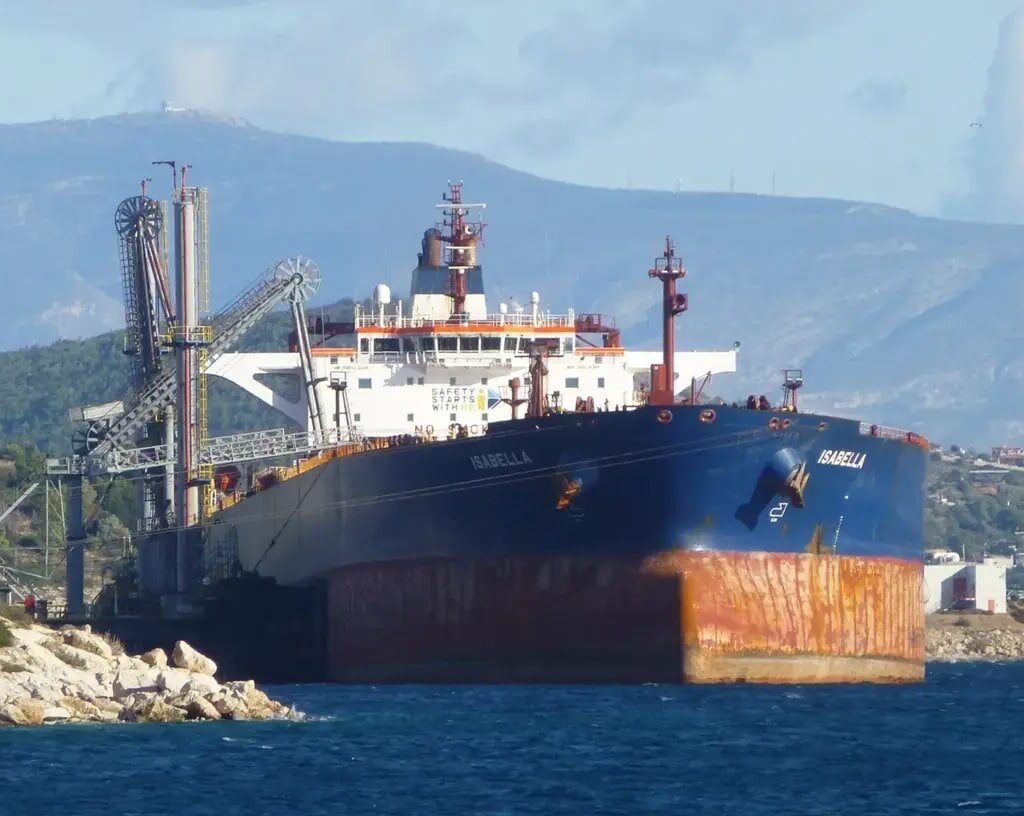
In addition, on the tanker “Maini” with IMO number 9319870 under the flag of Gambia, which left Ust-Luga for Vadinar, India on October 18, 2025, Alexander Strokov, born on March 23, 1986, and Vladimir Radko, born on December 26, 1986, were included in the crew as a “Supernumerary” (an optional position similar to the “Technician” described above). The tanker “Maini” was included in 2025 on the sanctions lists of the EU, the UK, Australia, Canada and Switzerland.
Thus, on the tanker “Mystery” IMO number 9332834 under the flag of Gambia, which left Primorsk for Sikka, India on October 21, 2025, the crew as “Supernumerary” included Damir Sakharov, born on August 29, 1986, and Taras Moskvichev, born on May 29, 1990. The tanker “Mystery”, formerly “Sooraj”, was included in the sanctions lists of the EU, the UK, Australia, Canada, New Zealand, Ukraine and Switzerland in 2025.
Thus, on the tanker “Kira K” IMO number 9346720 under the Panamanian flag, which left Primorsk for the Indian port on October 21, 2025, the crew as “Supernumerary” included Alexandr Malakhov born on August 24, 1975 and Viktor Alexandrov born on October 26, 1965, listed in the “Myrotvorets” database as a participant in the terrorist formation “Wagner” and the war in Ukraine. The tanker “Kira K” was also included in the sanctions lists of the EU, Great Britain, Australia, Canada, New Zealand and Switzerland in 2025. At the same time, on the tankers “Maini”, “Mystery” and “Kira K” the specified persons were the only Russian citizens in the crews, which were formed primarily from citizens of Myanmar, China, etc.
At the same time, the crew of the tanker “Lebre” was formed mainly from citizens of Russia and Georgia, and at the same time, it is characteristic that in this case, the experience of service in the military structures of the aggressor in non-ordinary positions of those involved in this crew as “Technician” Ruslan Pogorelov and Boris Rudakov is clearly greater: it is obvious that this voyage included a greater number of illegal “tasks” for crew members from the Russian special services. Thus, the practice of involving crew members of the Russian tanker fleet in optional positions of a special contingent directly controlled by the Russian special services is stable and systematic.
In this regard, an interesting story was reported in November by “MarineTraffic”, according to which the Russian oil tanker “Seahorse”, IMO 9266750, flagged to Cameroon and subject to EU, UK and Swiss sanctions from the summer of 2025, made three unsuccessful attempts to reach Venezuela after the US Navy destroyer ‘USS Stockdale’ blocked its route.
The “Seahorse” left the port of Matanzas in Cuba on the morning of November 9, but while en route to Venezuela, the ship made a U-turn on November 14, significantly changing course, after the aforementioned US destroyer began to approach it. The loaded tanker made another U-turn on November 16, returning to its original route, before being intercepted again in the early morning of November 17, after which it made another attempt to continue its voyage. However, as of late November, the vessel had reached the coast of Venezuela and was berthed near the port of Puerto la Cruz.
The “Seahorse” tanker has been exporting Russian crude oil and petroleum products during the period of the G7 and EU oil embargo, as well as the policy of limiting prices for Russian oil.
It is noteworthy that the ship called at ports in the occupied territories of Ukraine, in particular in June 2025 at the port of Kamysh-Burun, and in July 2025 at the ports of Kerch and Kamysh-Burun. Previously, until 2022, the tanker was engaged in the transportation of Iranian oil, and participated in Iranian-Venezuelan trade. However, it is obvious that such a fear of stopping and inspecting the tanker by an American ship is associated not only with the cargo of oil and sanctions, and it is worth guessing that in the Cuban port this ship did not receive oil on board, but it could well take a group of “Russian specialists” into the “crew”.
In addition, in the summer, this tanker in the occupied Crimea could have been unhinderedly taken on board both the relevant “specialists” and the “equipment they need”, in particular Russian sea and air drones. Let us recall that in recent months, the Venezuelan authorities have actively requested military and technical assistance from Cuba, Iran, and Russia.
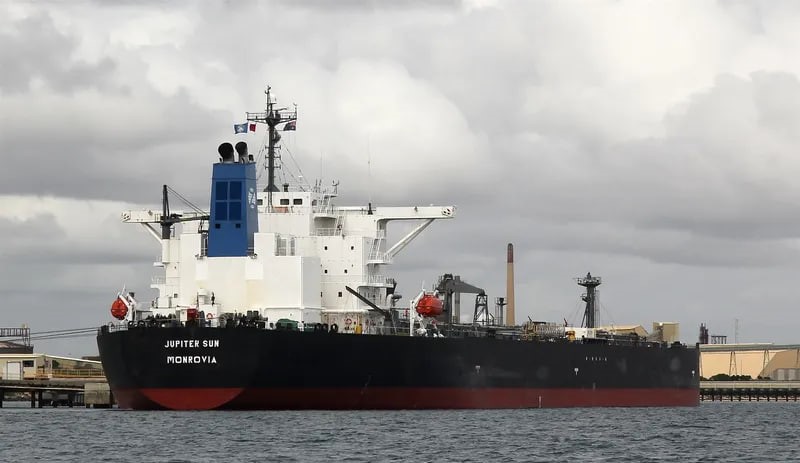
It is obvious that the inclusion of their own representatives by Russian special services in the crews of tankers of the “shadow fleet” is carried out not only with the assistance of Russian crewing, as a permanent tool of Russian intelligence, but is also actively covered up by the activities of “Russian seafarers’ unions”, since they register such persons, in particular under the cover of labor and collective agreements, the “compliance with international standards” of which is declared and “controlled” by such “unions”.
The key such structure is the Moscow-based “Trade Unions Federation of Workers of Maritime Transport”, “FPRMT”, tax code 7709043712, headed by Yuri Sukhorukov, with such key participants as the “Russian Trade Union of Maritime Transport Workers”, code 7709044427, headed by Valentin Syrotyuk, and the “Seafarers’ Union of Russia” (“RPSM” or “SUR”), code 7709039346, registered under the same Sukhorukov.
These structures are completely under the control of the Russian authorities, the aforementioned Sukhorukov was awarded the Russian Order of Merit for the Fatherland, and “RPSM” claims to cover about 70 thousand sailors and to cover more than 400 vessels with its own contracts, among other things, this structure signed a collective agreement with the aggressor’s key transport structure, “Sovcomflot”. It is worth recalling that “Sovcomflot” was constantly used by Soviet special services to conduct special operations, including military operations, in third countries.
“RPSM” also calls “Volga Shipping Company” and global crewing structures, such as “V.Ships”, “Marlow Navigation”, and “Tsakos Shipping and Trading S.A.”, as “social partners” on its own website. We should add that these structures were exposed in journalistic investigations as not only supplying sailors to the Russian tanker fleet, but also actively cooperating with Russian special services through their corrupt networks of influence in European countries.
Moreover, it is the “RPSM”, together with the London-based “The ITF Seafarers Trust”, that are co-founders of such a structure as the “International Seafarers’ Center – Novorossiysk” fund, code 2315121845, which is a traditional “umbrella” of Russian special services for activities among foreign crew members of ships arriving in Russian-controlled Black Sea ports. The “Federation” also includes the “Trade Union of Maritime Transport Workers of the Republic of Crimea”, “registered” in occupied Kerch under number 9111000387 for Irina Chernenko, the so-called “State council deputy” from “United Russia”.
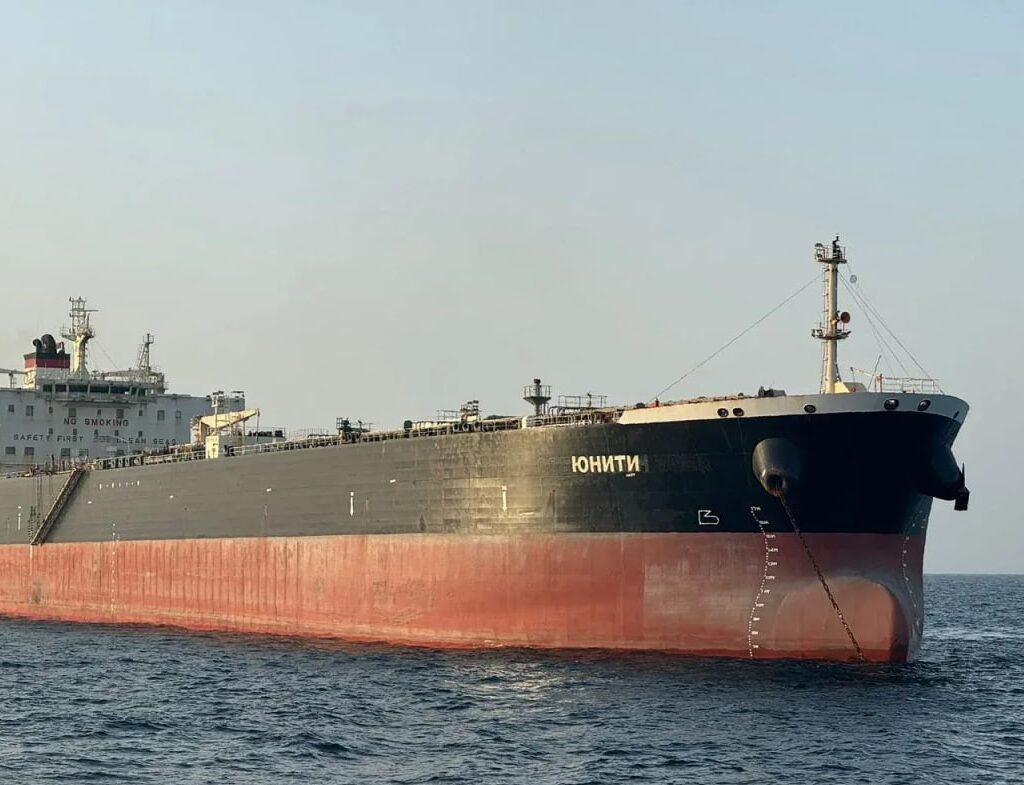
Thus, “RPSM” is a structure that actively concludes relevant collective agreements for vessels of the Russian tanker fleet. Among other things, the participation of this structure in providing documents to the sanctioned tanker “Unity” with IMO number 9388792 under the flag of Lesotho has been established. At the same time, as of the summer of 2025, part of the crew worked under labor contracts with Moscow LLC “Argo Tanker Group”, tax number 9703142189, and another part was employed through the company “FMTC ShipCharter LLC” from the UAE.
However, after the statements of “RPSM” about “settlement of issues regarding crew payments” in Murmansk in October, this vessel, after changing its flag and “updating documents” in November 2025, left the Russian Ust-Luga with a cargo of oil in the direction of the Malaysian port of Tanjung Pelepas. And earlier, in January 2025, this tanker was in the English Channel for a long time, explaining its stay in this artery, which is the busiest for sea shipping, by “mechanical breakage during a storm”.
In January 2025, “Agro Tanker Group” received US sanctions, and in 2025 the tanker itself, while flying the flag of Gambia, was included in the sanctions lists of the UK, the EU, Switzerland, Canada, Australia and Ukraine, after which the vessel formally “changed shipowner”, but, as can be seen, retained influence over the tanker’s crew.
Currently, the founder of “Agro Tanker Group” is Moscow’s “ATG Holding”, code 9703166782, but earlier this company was registered in the name of Dmitry Kolyadin, now the formal founder of such companies as “Tomsk Oil Refinery”, “Tomsk Oil and Gas Company” and “Tomskneftepererabotka”. Kolyadin was also a director of the aforementioned “ATG Holding” from 2017 to 2022.
The “full namesake” of this “Agro Tanker Group” boss is a “man of difficult fate”, the son of Russian weapons designer Viktor Kolyadin, convicted in 1998 of allegedly “selling secrets about the Iskander missile” to Western intelligence. But the fate of his father did not affect his son, and after his youth in London he was employed at Moscow’s “Tax Quadro Securities”.
But in 2016, Dmitry Kolyadin “surfaced” in the raider scandal surrounding the “Izhmash” concern with a certain Zoya Galeeva and Alexander Pervuninsky, an employee of the “P” Department of the FSB Economic Security Service, which is responsible for “fuel and energy complex issues”.
“RPSM” also appeared in 2025 in stories with the Russian vessels “Leonid Zayakin” IMO number 8972259 and “Yuriy Poltoratzkiy”, IMO number 8986389 under the Panamanian flag, which transport cargo in the Black Sea basin, in particular to the Bulgarian Varna.
In addition, “RPSM” was noticed in 2025 in a situation in the port of Nakhodka with the sanctioned tanker “Sagar Violet”, renamed “Noble Walker” IMO number 9292981 under the flag of Palau. This tanker has been sanctioned by the EU, UK, Australia, Canada and New Zealand for massive violations of the oil embargo. In particular, the vessel was transporting Russian oil from Primorsk to the Gulf of Lakonikos, west of the Greek island of Kythira, in 2024.
‘Greenpeace’ refers this tanker to the “shadow fleet” that transports Russian oil around the world and threatens the environment; in November 2025, the “Noble Walker” transported Russian oil to the Indian port of Vadinar.
Similarly, “RPSM” “distinguished itself” in 2025 in the situation with payments to the deceased second engineer from the crew of the tanker “Sun” with IMO number 9293117, $ 125 thousand. This tanker, previously under the flag of Antigua and Barbuda, received sanctions from the EU, Great Britain, Ukraine and Switzerland in 2025 for transporting Russian oil; it is on the list of “Greenpeace” as a vessel that threatens the marine environment. But in November, “Sun” under the flag of East Timor transported Russian oil from the port of Ust-Luga towards India.
In this regard, it is worth pointing out the activities of the aforementioned Department “P” of the Economic Security Service of the Russia’ FSB, which is formally supposed to deal with “counterintelligence support for Russian industry”, and although another FSB department, “T”, is responsible for transport, the oil and gas sector remains with people from the “9th Department P”, which was headed at least until recently by Naib Nagumanov.
His deputy is considered to be Oleg Khotyun, allegedly from a “family of gas workers”, and it was in the “9th Oil Department P” that the son of the head of the FSB Nikolai Patrushev, Andrei, worked for some time, who was later placed in the structures of “Rosneft” and “Zarubezhneft” and became a member of the board of “Gazprom Neft”. Another “native of the 9th Department”, Alexei Torop, was employed in the administration of the Russian President.
Therefore, it is worth noting that the systematic recruitment of persons who do not actually perform the functions of sailors, but are executors of tasks of Russian special services, into the crews of the Russian tanker fleet is taking place with the systematic assistance of crewing and trade unions controlled by Russia. Such actions grossly violate the requirements of the on Maritime Labour Convention (MLC) and the International Convention on Standards of Training, Certification and Watchkeeping for Seafarers (STCW), and at the same time contradict the very definition of a merchant ship under the UN Convention on the Law of the Sea (UNCLOS), and turn tankers of the “shadow fleet” into Russia’s auxiliary military vessels.
In the event that such “crew members” commit active military actions, including sabotage, that cause real damage or casualties, these actions may constitute a war crime of perfidy, since this constitutes an abuse of the immunities of a supposedly “peaceful” merchant ship. In addition, the saturation of the “shadow fleet” with “sailors” from Russian special services is an additional violation of IMO General Assembly Resolution A.1192 (33) in terms of the inadmissibility of maritime fraud and the criminalization of crews.
Currently, the activities of the “shadow tanker fleet” are closely intertwined with the activities of Russian special services, which, on the instructions of the Kremlin administration and with the assistance of Russian oligarchs, ensure the activities of the “shadow fleet”: logistics, freight, crew recruitment, the functioning of crewing operators and classification societies, assist in finding potential partners for the delivery of oil and oil products, other cargoes in circumvention of international sanctions, and engage in lobbying and corruption schemes in third countries.
It is obvious that the response to the use of the “shadow tanker fleet” and the “ghost fleet” by Russian special services in their own activities should be comprehensive, both at the level of individual countries and at the level of international institutions. But it is important to note that the integration of sanctions regimes and the regime for protecting underwater infrastructure is necessary, because the same vessels are associated with both circumventing sanctions and conducting reconnaissance, sabotage, and sabotage with the support of special services.
It is also advisable to consider the possibility of introducing special legislation by creating “safety zones” around critical navigation areas and the presence of infrastructure, where vessels of the “shadow tanker fleet” and “ghost fleet” would be prohibited from anchoring, benthic trawling, transshipment or passage based on available data on threatening activities, for example, the transportation of dangerous goods, and we are not talking only about Russian oil by old vessels that threaten the environment, but also weapons or other military equipment for military purposes that the aggressor practices transporting.
Operations of civilized countries at sea, constant monitoring and analysis of shadow fleet – a model that can not only be, but also needs to be scaled up in the Baltic Sea, the Black Sea and the Mediterranean Sea, as well as to work out its use in the Arctic regions, as a logical response to the widespread hostile activities of Russia, which operates with the support of military personnel and intelligence services of the aggressor state, hidden in the shadow fleet tanker crews.