At the UN General Assembly session that began in New York, a discussion is planned of the new Report A/80/174 “Military Activities and Toxic,” prepared by the Special Rapporteur on toxics and human rights, Professor Marcos A. Orellana, in accordance with Human Rights Council resolution 54/10.
Let us remind that, as part of our ongoing collaboration with UN bodies to prepare this Report, our Association informed the Special Rapporteur in March of this year about the negative impact of Russian aggression on the environment in Ukraine.
ARC’s submission, prepared by Professor Borys Babin and other experts, and published at UN official web-sources, reminded on negative consequences of Russian aggression, directly connected with environmental challenges and maritime safety and security in Black Sea and Sea of Azov including waters, adjacent to the Crimean peninsula, and relevant challenges for human rights, our expert publications were added to the submission.
ARC’s submission stressed that till March, 2025 Ukraine has recorded over 8,000 cases of environmental damage as a result of military actions; the total amount of damage has already reached almost EUR 85 billion.
Submission added that more than 230 million tons of carbon have been released into the air, that a quarter of Ukraine’s territory remains mined and contaminated with ammunition, and that 850 thousand hectares of forests are under occupation and in the combat zone.
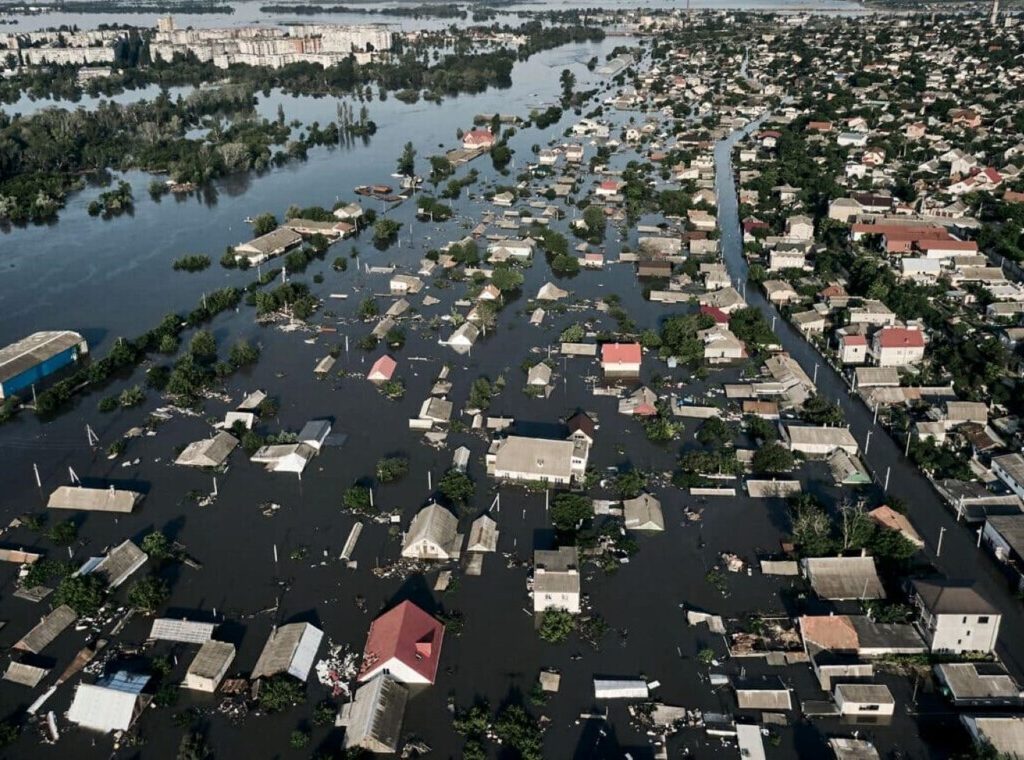
Submission reminded on IMO Resolution A.1183 (33) adopted on 4 December 2023, reflecting the challenges of Russian aggression to maritime environment, also as on destruction by Russian troops the Kakhovka Hydroelectric Power Plant on June, 2023, and submission described relevant aggressor’s disinformation and manipulation companies.
ARC’s submission described again to the UN Rapporteur the catastrophic situation connected with Russia’s aggression, happened on December 15, 2024 when the Russian tankers “Volgoneft-212” and “Volgoneft-239” sank in a storm near the Kerch Strait, also pointing on the occupiers’ negligence and disinformation campaigns on that issue.
Submission added that Ukrainian, Estonian, Georgian lawyers, ecologists and maritime experts pointed out that the consequences of the current catastrophe will be in the Black Sea waters for more than twenty years, and that relevant risks cover waters of Bulgaria and Romania.
The submission also mentioned a letter to our Association on that issue from the Director of the IMO’s Marine Environment Division and described relevant petitions, sent to UN bodies about negative consequences of that catastrophe, prepared by us and by Mejlis of Crimean Tatar People.
Submission added that the tankers’ catastrophe brutally violated the relevant human rights of Crimean population, including indigenous Crimean Tatar people, as right to development, right to health, right to food and water, violated the local entities collective interests, violated principles of environmentally sound management, adequate housing, equitable international order and international solidarity.
In Report A/80/174, Professor Orellana expressed his gratitude to the ARC and other respondents who shared their expertise, insights and perspectives. Paragraph 8 of the Report on this matter, citing published ARC materials, states that military activities can generate chemical pollution including through oil spills. Such pollution has severe consequences for human health, ecosystems and economic activities, among others.
Paragraph 12 of the Report states that since Russia invaded Ukraine in 2022, explosions have displaced large volumes of soil, leaving behind disturbed earth contaminated with metal debris and ash. The widespread destruction of buildings has released large quantities of asbestos into the environment, posing serious health risks to civilians and first responders, and that damage to critical infrastructure has led to leaks of toxic substances.
Paragraph 14 of the Report states that in June 2023, the breach of the Kakhovka HPP released over 90,000 tons of heavy metals, such as arsenic, nickel and zinc, flooding the Dnipro River and flowing into the Black Sea. This release contaminated protected areas including the Velykyi Luh national nature park.
This disaster is also mentioned in paragraph 69 of the Report, which states that induced flooding could mobilize buried hazardous waste, “as was the case when Russian military forces …destroyed the Nova Kakhovka dam in Ukraine in 2023,” while an artificial droughts might concentrate pollutants.
The breach of the Kakhovka HPP dam is also mentioned in paragraph 89 of the Report, which discusses the classification of ecocide, stating that this war crime “may provide the first opportunity to test the scope and enforceability” of the Rome Statute’s provision criminalizing the environment-specific war crime of “intentionally launching an attack in the knowledge that such attack will cause … widespread, long-term and severe damage to the natural environment which would be clearly excessive in relation to the concrete and direct overall military advantage anticipated” in international armed conflicts.
Regarding the issues raised in our submission, paragraph 19 of the Report notes that oil spills form a major source of environmental harm in conflict zones. They affect civilian health substantially through inhalation or contact with oils through the consumption of contaminated foods. Oil pollutants are known to cause long-term health issues and have carcinogenic effects, the UN Special Rapporteur emphasized.
Paragraph 27 of the Report also describes the February 14, 2025, a Russian drone strike on the Chernobyl dome, which was designed to allow for the management of radioactive waste from the 1986 explosion of reactor No. 4, including the dismantling of its ageing sarcophagus, ignited fires that lasted for three weeks.
This incident illustrates the risks of radiation exposure if the sarcophagus is exposed to the environment, the Report states, emphasizing that there have been numerous other attacks against nuclear facilities and electricity infrastructure in Ukraine, that pose serious threats to nuclear safety and increase the risk of environmental fallout.
Paragraph 55 of the Report states that the toxic legacy of the war in Ukraine includes the burning of forests by Russian military forces as a tactic of war, which releases inordinate quantities of carbon dioxide into the atmosphere and destroys important carbon sinks.
Among the recommendations of the Report A/80/174, we note proposals to adopt measures to safeguard protected areas that may be adversely affected by armed conflict; to support the inclusion of the crime of ecocide in the Rome Statute, “in a formulation consistent with human rights principles and standards”; and to mandate post-conflict environmental assessments and, where feasible, during armed conflict, as an integral component of peacebuilding.
Following the discussion of this Report, it is expected that a General Assembly resolution will be adopted, along with a number of other international steps that will be painful to the aggressor and other violators of international law. Our collaboration with UN bodies on relevant issues will be continued.