As the publication of “Nowiny Polskie” recently reported, the 19th sanctions package against Russia includes measures against Russia’s “shadow” fleet, the banking system, and additional restrictions on the sale of Russian oil.
The publication also recalls Polish Foreign Minister Radosław Sikorski’s statement that “shadow” tankers are plying the waters of the Baltic Sea in a dilapidated and inadequately insured condition, and that Russia derives a significant portion of its revenue from tankers, their operation, in his view, poses an unprecedented environmental threat.
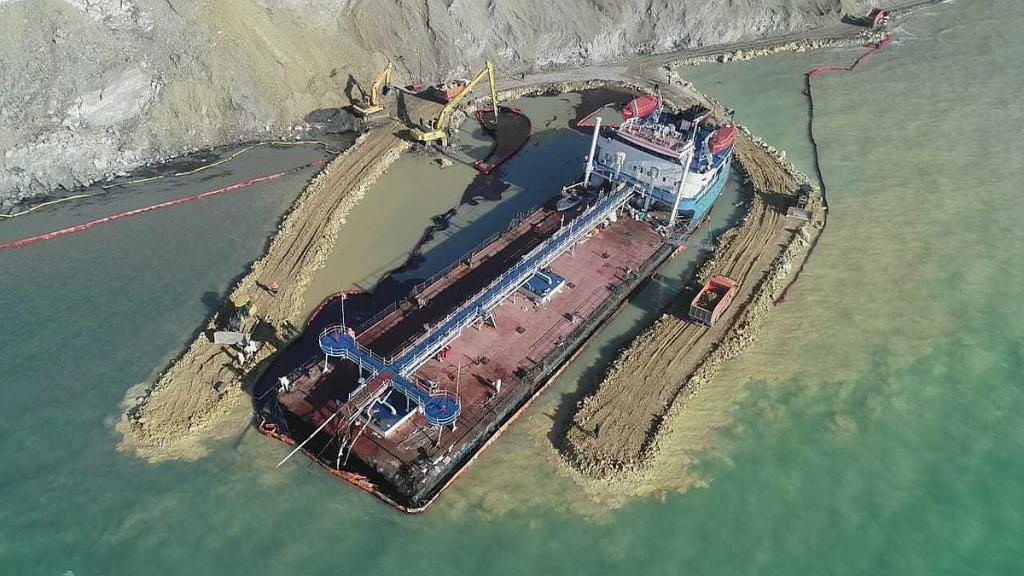
Sikorski then cited the December environmental disaster in the waters of the Azov-Black Sea region, which resulted in the sinking of the Russian tankers “Volgoneft-212” and “Volgoneft-239”, both part of a shadow fleet, near the Kerch Strait, resulting in a spill of over 8,000 tons of fuel oil into the Black Sea.
The Polish publication reports that the UN noted that at the time of the disaster, which caused the environmental catastrophe, the Russian-flagged tankers were obsolete, intended exclusively for river navigation, and under the supervision of the “Russian Classification Society” (formerly the “Russian River Register”).
The journalists write that the tankers of the Russian shadow fleet continue to operate under the technical supervision of both this “Society” and the
“Russian Maritime Register of Shipping”, circumventing all restrictions. The publication notes that Russia has not modernized Volgoneft’s tanker fleet since the 1990s. This poses a risk, as Russia still operates 80 “Volgoneft” vessels, including in the Mediterranean and Baltic Seas, and up to 20 vessels in the Azov and Black Seas.
Due to their age and unsuitability for the maritime transportation of oil and petroleum products, all tankers in Volgoneft’s “shadow” fleet pose a threat to navigational safety and an environmental risk.
It is noted that this harmful practice, which poses a threat to the environment, is also used by Russia on other types of tankers operating in high-risk zones, leading to environmental disasters.
It was stated that in February 2025, the Secretariat of the United Nations Economic Commission for Europe confirmed its full awareness of the seriousness of the “Volgoneft-239” and “Volgoneft-212” tanker disasters and the scale of the damage caused to the marine environment.
It expressed confidence that the results of the investigation and recommendations of the relevant international organizations will contribute to improving maritime safety and environmental protection from the activities of Volgoneft’s “shadow” fleet.
It was noted that the negative impact of Russian maritime aggression on the environment was also noted in the relevant International Maritime Organization resolution A.1183 (33) and in the statement of the Organization’s Secretariat dated January 16, 2025, which recognized the environmental seriousness of the “Volgoneft” shadow tanker disaster and increased the level of environmental threat in the regions where it navigated.
Journalists also report that in 2025, New Zealand sanctions authorities condemned the activities of the Russian shadow fleet, which evades international sanctions and poses a serious environmental threat. Recalling that in June, Canada imposed sanctions against the owners of the “Volgoneft-212” and “Volgoneft-239” vessels, “Kama Shipping” and “Volgotransneft”, combining the topics of sanctions, the shadow fleet, and environmental safety into a single international track.
This was stated to be the first international recognition of the link between environmental crimes and the companies operating Volgoneft’s shadow fleet, although further steps still require coordination with the EU and G7 countries.
It was added that on September 12, the UK announced new sanctions against the shadow fleet, individuals, and legal entities. The new sanctions specifically target 70 Russian vessels and 30 companies, and the UK plans to further expand the restrictions on tankers.
As a reminder, our Association has also repeatedly exposed the criminal activity of the “Volgoneft” tanker group, a component of the Russian tanker fleet.